
The No Bullshit Guide Hip Hop Demographics, Part One

Posted by Justin Boland on Aug 04, 2008 | 21 comments

wtf 2.0 digital music forum eastDid you know that even the biggest record labels on Earth right now are scrambling, just as much as you and I are, to figure out what’s going on? “Demographics” sounds scientific as all hell, I know, but it was mostly (over)educated guesswork right up until the past five years or so. Thanks the the growing science of data mining, and the explosive growth of consumer databases to mine, demographics is starting to resemble actual math based on reality.

As we learn to tame the flood of new information and make sense of the patterns, the real demographics of hip hop are finally starting to emerge:

The global hip hop community: twenty four million people between the ages of 19-34, from a range of nationalities, ethnic groups and religions. Their collective spending power is $500 billion annually in the U.S. alone.

That’s from a Tech Crunch article on a “hip hop culture” effort from Accel Partners and Russell Simmons called Global Grind.  It’s one of over a dozen conflicting but authoritative-sounding estimates that I’ve found in the course of researching this article. 

As much as I’d like to just give you the numbers, I can’t do that. Information is power, and the corporations who own these databases are in no rush to make their information public.  The waters get murkier when multiple, rival consultant firms, like Ypulse for example, issue conflicting (and insanely expensive) “White Paper” reports.  These reports are based on taking a small body of private research and extrapolating those numbers to fit a vastly larger sample: usually the entire consumer base of the United States. This obviously leads to some very suspect numbers, so we’re left with an incomplete puzzle.  Rather than give you conclusions, I’m going to give you all the available resources in one place.  This is an exploration, not a simple answer.

asian hip hop

Did you know that 37.1% of 15-25-year-olds in China love hip hop? Remember, that figure is from yet another expensive white paper, but it’s worth thinking about.  According to Chinese government statistics, the 15-29 demographic makes up 22.8% of the population.  Considering we’re talking about China here, that’s around 296 million—in other words, a core hip hop demographic about the same size as the entire United States.  Food for thought, and also a much larger figure than the “24 million” that Russell Simmons was pushing earlier.

Cracker Mythology 101

cracker whitey caucasian hip hop rap

Yeah, everyone knows that the majority of hip hop listeners are rich white kids in high school, if not younger.  What’s also fascinating is that nobody can back that up with any information whatsoever.

Normally, I’d make an impassioned plea for people to stop being dumb, but I’d actually like to encourage it. Your laziness and gullibility will make my own success that much easier, and I thank you.  Audible Hype, of course, is written for the smart kids.  Finding accurate, detailed information about the demographics of hip hop and the raw numbers behind the record business is not simple.

…but it is possible.

Thank God for Davey D

Davey D has been a shining example of hip hop journalism for a long damn time, and he said it straight: “The truth of the matter is that this 80% white Hip Hop fan myth has long been a nice marketing tool used by media corporations to justify ad revenues for Top 40 radio stations.” His article on this myth is a beautiful beat-down and very much worth reading.

Davey D hip hip journalistIt started in 1991 when Newsweek Magazine did a cover story on Gangsta Rap and in their article they put out an un-researched statistic that said 80% of Hip Hop’s audience is white and that its reflected in record sales. That stat has been bantered about ever since as an undisputable stone cold fact.

…Top 40 stations had this Newsweek quote along with their CHR status that they could present to ad buyers. Essentially they were able to say, ‘yes we’re playing Public Enemy, NWA and 2 Live Crew, but this is what the mainstream (white audience wants). Look at this Newsweek article. It’s proof positive that 80% of the people who like this aggressive music are the main ones purchasing it.

What wasn’t really publicly known or even taken into account was how Asians were classified when it came to radio ratings. They were always counted as white people.

As you can see, this brings us back to corporations and private databases.  Once you start a culture of competitive intelligence, you’re creating a powerful incentive for disinformation as a strategy.  This leads to headaches.  Since we’re dealing with a hall of mirrors and conflicting opinion, let’s get some clarity, shall we?

The Outer Limits

Worldwide Hip Hop Audience

When you’re dealing with a massive system of unknown size, it’s helpful to start with the extremes.  For instance, on a planet with over 6 billion humans, you can rest assured that over 70% of them cannot afford to buy enough food, let alone your album, so we’ve already whittled things down considerably.  Canada has 33 million people, the UK has over 60 million, and America is past 300 million humans, mostly overweight people with horrible taste in music.  All told, that’s a potential audience of just under 400 million people—but how many of them like beats and rhymes?
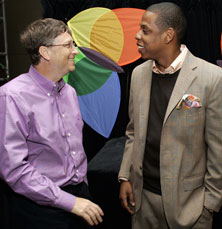
Bill Gates Sponsors Audible HypeAs it turns out, it’s hard to even get a straight answer on what the best-selling hip hop album of all time was.  According to most sources, it’s still MC Hammer’s timeless masterpiecePlease Hammer Don’t Hurt Em,” which moved 20 million copies. The fact that Eminem’s Marshall Mathers EP sold 21 million copies would seem to deny Hammer’s claim to anything but novelty status. 

Let’s not be intimidated by huge numbers, though. Music is a big landscape with a lot of money flying around.  Wu Tang Forever sold 8 million copies and they can still go on world tour whenever they want, with $40 ticket prices in most cities. Dudes like us are just trying to fill up local venues and turn a profit off a hobby, and that’s a much more attainable goal.

Up next, I’m going to be taking a look at hands-on demographics for underground hip hop artists.  In the past decade, we’ve seen a new standard of success emerge—not exactly superstars, but sure as hell not broke, either. We’ll call it “Underground Famous.”

Meanwhile, here’s some tools and information for you to keep doing your own research.  I’m also highly interested in any feedback and pointers the readers have got.  Thank you for your time.

Justin Boland

Five Star Resources

Bruce Warila of Unsprung Media maintains a list of music industry facts and figures, a pipeline of important and current data, complete with citations.  Thank you, Bruce.

The Hip Hop Demographic Project is a worthy, and especially thought-provoking, contribution to the study.

The entire demographics archive over at Pro Hip Hop is a mixed bag with a great deal of gems.

Pew Internet report on Teens and Social Media.

And of course, enjoy the bounty of Wikipedia: Marketing Research * Market Segments * Competitor Analysis * and if you’re really ready to dive in, Consumer Theory.

21 Comments

  1. gravatar

    1 JeffroDigi says...

    I always laughed at those statisics that said most of the hip hop audience is white. Although a big chunk may be, theres still quite a few black people that like it too. I think the people that echo those facts as gospel dont even know all that many black people.

    Living in NYC and now Jersey I see less and less white people into hip hop, seemed like it was a fad in the late 90's to early 2000's that has actually petered off quite a bit. I do not know what the kiddies are listening to, maybe among them its as big as it ever was. But I do know most black folks (at least the ones I've come into contact with) listen mostly to hip hop. Hot 97 and Power 105 are among the highest rated radio stations in New York, where whites have become the minority. This also does include all other races as well which are never mentioned.

    I like how you brough up other races not being mentioned- its so typical doing things that way I even just did it.

    Posted at 9:28 a.m. on August 4, 2008

  2. gravatar

    2 Justin Boland says...

    I'd really like to see more USEFUL and MEANINGFUL parameters for Demographics than RACE. Skin color is not a motherfucking indicator of musical taste-never was, definitely isn't now.

    I'm not claiming race doesn't matter anymore-even a surface glance at prison statistics make it obvious that the "war on crime" is a war on black people, and systematic racism is a serious problem, especially here in the United States. But in terms of music, and promotion, race means less and less every day. So does genre, for that matter. We're headed for a truly WORLD MUSIC in this century, and these old categories are just handicaps now.

    Posted at 10:04 a.m. on August 4, 2008

  3. gravatar

    3 JeffroDigi says...

    I agree, I was just speaking on one of the things in the article.

    In terms of music I think geography would be a huge parameter that could be especially helpful. I remember MTV (a credible source, i know) had something back in the late 90's about where rappers sold the most records and suprisingly Method Man's album sold the most in nyc. It was 80% of the total sales or something like that. Knowing where your audience is would be the easiest way to know where to book a show, especially for acts with smaller followings.

    I guess paramters also including age of audience and average income of audience would be helpful as well.

    Posted at 10:58 a.m. on August 4, 2008

  4. gravatar

    4 Justin Boland says...

    Yeah, age and income are pretty much the real deal...and geography of course. I'd like to get a "temperature map" of the relative interest level for various genres, laid over the continental US.

    And I definitely didn't mean to imply I was responding you...I was just continuing to vent about the absurdity of racial profiling, on any level. Should have been more clear.

    Posted at 11:21 a.m. on August 4, 2008

  5. gravatar

    5 Justin says...

    Hey, glad to see you're back, Justin. I've enjoyed the articles before your hiatus since March and I'm looking forward for more.

    Who is your audience? I know that this is completely subjunctive, but who listens to good music anymore?

    Posted at 1:44 p.m. on August 4, 2008

  6. gravatar

    6 Justin Boland says...

    ^^Everyone. Good music has universal appeal. From what I'm seeing, our target audience is people with an omni-genre CD collection. This makes any kind of straightforward ad-based promo campaign difficult, but it also opens up new opportunities for new approaches...which is pretty much what World-Around Records is all about. We know our strengths and we're learning our limitations.

    And to answer the question that probably raises: yes, I am going to be doing articles about our operation and the lessons we've learned from the past year.

    Posted at 2:12 p.m. on August 4, 2008

  7. gravatar

    7 Justin says...

    "Everyone. Good music has universal appeal. From what I'm seeing, our target audience is people with an omni-genre CD collection."

    Sorry, I was really vague, but I that's what I was trying to get at. There's a group of people that is exactly what you described above, and it seems like a really small number to me. Well, a small percentage, maybe a decent number.

    Again, I look forward to your new articles. Thanks a lot.

    Posted at 2:48 p.m. on August 4, 2008

  8. gravatar

    8 Justin Boland says...

    Given the Billboard 100 success of Rhymesayers and Def Jux, it's definitely a decent number. Even if only .01% of the English-speaking music audience fits that demographic we're talking about, that's still several million people. Sell an album to .01% of that and you've got enough to buy a car.

    This is definitely where I'm taking the next article on being "Underground Famous"-making money off music and still being able to shop for groceries in peace.

    Posted at 4:03 p.m. on August 4, 2008

  9. gravatar

    9 Justin Boland says...

    Found a great resource this morning-Social Networking user demographics. It's valuable enough to know approx. how many users the various platforms actually have, but this also breaks them down by gender and age:

    http://business.rapleaf.com/company_press_2008_07_29.html

    Posted at 6:08 a.m. on August 5, 2008

  10. whatup justin. i authored the "Hip Hop Demographic Project" that you referenced above.

    let me know if you want to collaborate on any hip hop demographic studies in the near future. i work in the ad industry and have access to studies and proprietary tools.

    peace.

    Posted at 5:49 p.m. on August 7, 2008

  11. gravatar

    11 Justin Boland says...

    Man, I wish I had the time to devote to that. I might have to clear some out...I'll think it over and get back to you, but getting World-Around off the ground is my big project for 08.

    Posted at 8:54 a.m. on August 8, 2008

  12. gravatar

    12 JeffroDigi says...

    I was thinking about demographics and ive noticed theres lots of people our age that dont listen to hip hop because they dont think its good anymore. Lots of people say they dont make it like they used to (meaning talented stuff with content). If you or anyone can find a way to reach these people theres a whole bunch of people that arent hip hop fans so to speak that would be interested in your music.

    Many people these days are into a little of everything, once you get a little older its not about scenes anymore just liking what you like.

    Posted at 4:16 p.m. on August 8, 2008

  13. gravatar

    13 Emcee R-Two says...

    Nice article.

    Selling CD's alone is hard as hell! Especially in 08's economy, not to mention trying to break it down to a core demographic, meanwhile relying on an extremely limited promotional budget.

    Love seeing the effort though, and I'll definitely be peeping for part 2.

    I don't know if its hit on the artists, but marketing music with another product seems to be a sure way to expand your fan base and/or sales as well.

    As far as demographics, I tend to (optimistically) believe that anyone under the age of 36 has SOME sort of Hip Hip Appreciation. Meaning that there's at least something produced by the culture of hip hop that they can respect and or possibly purchase. The latter, of course, would be our job to sell them.

    peace,

    <2>

    Posted at 9:43 a.m. on August 14, 2008

  14. gravatar

    14 Emcee R-Two says...

    p.s. mad props to Davey D. and heres a link to a letter from Prodigy discussing how he plans to market his music while incarcerated for 2 years.

    http://hiphopnews.yuku.com/topic/770

    sorry, my html skills are lacking, you'll have to copy and paste yourself. lol

    peace,

    <2>

    Posted at 7:18 a.m. on August 17, 2008

  15. gravatar

    15 Justin Boland says...

    ^^Thanks for the heads up on that site, man. Goldmine.

    Posted at 7:25 a.m. on August 17, 2008

  16. man, thats very interesting..

    Posted at 9:07 p.m. on August 26, 2008

  17. gravatar

    17 J-fuckin-Kwest says...

    Everybody buys hip-hop.

    Okay, maybe not 'everybody' per se, but at least a percentage of each race on this planet is a hip-hop consumer.

    But who among those are counted in these statistical findings?

    The question remains.

    Posted at 12:18 a.m. on August 29, 2008

  18. gravatar

    18 Justin Boland says...

    See, I don't think anyone actually reads my stuff.

    Nobody is gonna call me on the 296 million hip hop fans in China? Is this was US education has come to? I myself didn't catch the mistake for months. I'm leaving it up there, I'll probably see it repeated in the New York Times by 2010.

    Posted at 7:43 p.m. on May 17, 2009

  19. gravatar

    19 Spartan says...

    Damn good reading, dude, thanks. It's remarkable how little information there is, considering we're in some kind of Information Age. When does Part 2 come out?

    Posted at 2:07 p.m. on May 28, 2009

  20. gravatar

    20 Nemo says...

    What's funny is that even by putting all the time and work into collecting all these numbers, it's still just another collection of essentially random, conflicting data that's impossible to verify. I mean, no offense, I just came to the end of this having only learned that demographics is a fairly useless science. Will you have actual numbers in the next installment?

    Posted at 12:20 p.m. on May 30, 2009

  21. gravatar

    21 Hydrodynamics says...

    Excellent reading but very disorganized and in-conclusive. Is it really that hard to find accurate data or are you just a lazy stoner?

    Posted at 3:43 a.m. on June 12, 2009

Comments are closed.